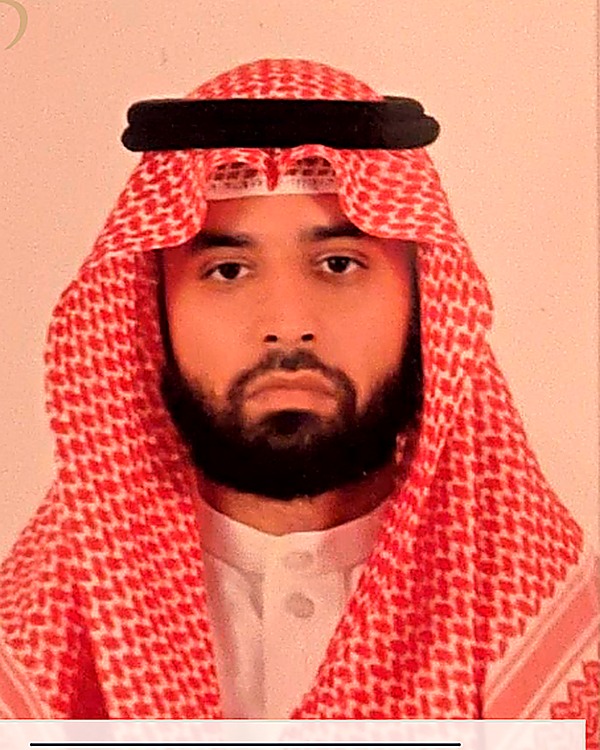
Dr. Sharafaldeen Bin Nafisah — Business Continuity, Resilience and Risk Leadership
Building resilient institutions. Developing leaders. Strengthening national preparedness.
Dr. Sharafaldeen Bin Nafisah is a Saudi healthcare leader in business continuity, institutional resilience and risk governance, and an emergency medicine consultant at King Fahad Medical City (KFMC) in Riyadh. He chairs the Business Continuity Department of Riyadh Second Health Cluster, leads emergency and disaster services at SEHA Virtual Hospital, and has directed specialist training in emergency medical services (EMS) and disaster management. He was elected Chief Executive Officer of ARETION Consulting, which has 13 investors, for 2026; through ARETION he advises healthcare organizations on keeping essential services running through disruption.
Focus
Business continuity management, institutional and operational resilience, healthcare risk governance, disaster preparedness, leadership development
Current roles
Chairman, Business Continuity Department, Riyadh Second Health Cluster · Emergency and Disaster Service Lead, SEHA Virtual Hospital · Emergency Medicine Consultant, KFMC · Member, Scientific Committee for EMS and Disaster, Saudi Commission for Health Specialties (SCFHS) · Chief Executive Officer, ARETION Consulting (elected for 2026)
Founder
Disaster Management Experts Club (lead)
Education
MBBS · Saudi Board in Emergency Medicine · Clinical Fellowship in Prehospital Care and EMS (McMaster University) · European Master in Disaster Medicine · LLM · MBA · MPH
Consultations
Arabic or English; online, on site, or by document review
Booked directly on the ARETION platform: platform.aretion.org
Biography
Dr. Sharafaldeen Bin Nafisah is a Saudi leader in disaster management, business continuity, institutional resilience and risk governance. His work connects frontline emergency medicine with what a health system needs around it to keep essential services running through disruption: clear governance, tested operational systems, and people prepared to lead under pressure.
His record is institutional. At Riyadh Second Health Cluster, he built the business continuity management framework for the cluster's hospitals from inception. At King Fahad Medical City, he was chairman of the Disaster Preparedness and Planning Department from 2023 to 2024, building its governance and readiness systems from the ground up, and then founded and chaired the Clinical Research Department, establishing its governance and compliance framework. At SEHA Virtual Hospital, Saudi Arabia's national virtual hospital, he founded the Virtual Disaster and Virtual Emergency Departments and created a rapid-response virtual team first piloted during Hajj. He has also directed the SCFHS subspecialty fellowship in EMS and Disaster Management, preparing physicians to lead emergency and disaster response.
He combines clinical practice with advanced training in disaster medicine, public health, law and business administration. That foundation shapes a consistent approach to risk and preparedness: understand the operational problem first, make accountability explicit, and develop the leaders who will coordinate the response when it is needed.
Through professional education, scientific publishing and the Disaster Management Experts Club, which he founded and leads, his work also connects institutional practice with a wider community of preparedness and resilience professionals across Saudi Arabia.
Building business continuity across a hospital cluster
As chairman of the Business Continuity Department at Riyadh Second Health Cluster, Dr. Bin Nafisah built the cluster's business continuity management (BCM) framework from inception. It is aligned with ISO 22301, the international standard for business continuity management systems; the alignment describes how it was designed, not a certification.
Priorities first. Business impact analyses (BIAs) identify which clinical and operational services are critical, what each depends on and how long each can be interrupted. Those findings set recovery time objectives (how quickly a service must be restored) and recovery point objectives (how much data or activity can be lost), and they shape recovery strategies that bring clinical operations, information and communication technology (ICT) and facilities into one plan. A cluster-wide risk register links the plan to the risks that could trigger it.
Governance that leadership uses. He developed crisis-management protocols, executive communication playbooks and risk-appetite statements adopted at cluster governance level, and introduced key risk indicators (KRIs) for critical services, with risk dashboards built into executive decision cycles. Continuity risk is weighed when decisions are made, not only after an incident. Continuity strategies are aligned with incident command, so escalation and recovery follow one structure.
Tested before it is needed. Scenario-based tabletop exercises, full-scale scenario tests and continuity stress tests check plans against realistic disruption, and the cluster's protocols have supported continuity of care through real events, including ICT downtime and medical-gas supply incidents.
Ownership inside each hospital. He advanced the hospital Business Continuity Ambassadors programme, which develops staff who build continuity into their own departments' daily operations, so that preparedness does not rest only with a central team.
Risk governance that reaches the executive table
His risk work extends beyond emergency response into how a healthcare institution governs itself. As founding chair of KFMC's Clinical Research Department, he established the department's governance, standard operating procedures and compliance framework:
Research governance: procedures aligned with Good Clinical Practice (ICH-GCP), the National Committee of Bioethics (NCBE), the Saudi Food and Drug Authority (SFDA) and the Personal Data Protection Law (PDPL), including streamlined ethics review and risk-tiered protocol review.
Data governance under the PDPL: joint-controller arrangements, data-transfer controls and breach-notification procedures.
Third-party risk: due-diligence standards and risk assessments for vendors, contract research organisations and academic partners, with clearer allocation of risk in contracts.
Integrity controls: conflict-of-interest processes, and anti-bribery and corruption training and attestations.
In 2025 he also led KFMC's Clinical Research Training and Education Department, which delivered institution-wide training on research risk management, data protection and ethical compliance, and developed competency frameworks so that governance requirements are applied consistently.
Across these roles the same discipline recurs: enterprise risk frameworks with a defined risk appetite, key risk and performance indicators, risk and control self-assessments, internal controls and corrective-action tracking, policy drafting, and executive risk reporting that supports decisions. Scenario planning, stress testing and structured learning from incidents keep the framework tied to what could actually go wrong.
Developing continuity and preparedness leaders
Institutions remain resilient when the people inside them can lead. Developing that capability runs through his work.
Specialist fellowship. He directed the SCFHS subspecialty fellowship in EMS and Disaster Management, with a curriculum that integrates incident command systems, scenario planning, mass-casualty management, preparedness for chemical, biological, radiological, nuclear and explosive (CBRNE) incidents and hazardous materials, and operational resilience.
Disaster Officer Programme. He directed the SCFHS Disaster Officer Programme.
Specialist courses. He has been programme director for courses in hazardous materials, CBRNE incidents, tactical emergency medicine and disaster triage for EMS.
Multicentre training. He has led a Resident EMS Programme shared by KFMC, King Saud University and the Saudi Red Crescent Authority.
Research capability. Institution-wide training on research risk, data protection and ethics, with competency frameworks and certification pathways.
Teaching in Canada. Course instructor in Ontario for Trauma in the Bush, with Six Nations Paramedic Services, and for a Difficult Airway course at Niagara College.
Continuity ambassadors. Local continuity leaders developed through the hospital Business Continuity Ambassadors programme.
His teaching has been recognised as Best Emergency Medicine Consultant Trainer and, earlier, Best Emergency Medicine Consultant Mentor (2022). In 2025, Yemen's Ministry of Health recognised his contribution to disaster-management training for healthcare executives, delivered as part of the King Salman Humanitarian Mission.
The aim is ownership: leaders who understand incident command, can run an exercise, can judge a risk and can coordinate across departments and agencies, so that preparedness does not depend on one person.
Disaster preparedness and virtual emergency care
His continuity work rests on disaster management at hospital and system level.
Hospital preparedness. As chairman of KFMC's Disaster Preparedness and Planning Department (April 2023–December 2024), he built hospital-wide disaster governance, cross-agency coordination, mass-casualty plans and hazardous-materials protocols from the ground up.
Cluster preparedness. He led an AI-enabled disaster preparedness and response programme across 12 hospitals of Riyadh Second Health Cluster, served as director of the cluster's Disaster and Operations Centre (June–December 2023), and directed responses to disaster events, including a medical-gas event and the rebuilding of hospital ICT, with root-cause analysis and corrective controls.
Virtual emergency services. At SEHA Virtual Hospital, where he has led emergency and disaster services since December 2023, he developed tele-emergency governance covering clinical, cyber and operational risk and created the Emergency Medicine and Rapid Response Virtual Team (EM-RRVT). Its pilot, from 13 June to 6 July 2024, began in Makkah during Hajj 1445; the published evaluation reports 324 patients from 20 countries. Evidence:Bin Nafisah S, et al., JMLPH 2025
He founded and leads the Disaster Management Experts Club, a scientific community that brings disaster-management specialists together to share knowledge, publish joint position statements on public-health threats and advance preparedness across disciplines; for example, the club's 2024 position statement on mpox preparedness and response.
He is lead author and editor of The Art of Emergency Medicine: A Practical Approach for Emergency Physicians (JMLPH, 2021; ISBN 978-1-7377485-0-2).
His research covers disaster systems, virtual emergency medicine, infection control and pandemic policy.
Selected publications on preparedness and continuity
Each discipline answers a different part of the resilience problem: medicine and disaster medicine, the operational reality; public health, the population view; business administration, resources and trade-offs; law, accountability, contracts and the resolution of disputes.
Degrees
Bachelor of Medicine and Bachelor of Surgery (MBBS), King Saud bin Abdulaziz University for Health Sciences (2005–2010)
Master of Public Health (MPH), biostatistics, University of New South Wales, Sydney (2011–2012)
Master of Business Administration (MBA), quantitative analysis, Alfaisal University, Riyadh (2012–2014)
Master of Laws (LLM) in dispute resolution, University of Aberdeen (2020–2021); an academic degree, not a licence to practise law
Advanced European Master in Disaster Medicine (EMDM), a Master of Science, Università del Piemonte Orientale, Novara (2022–2023)
Specialist training
Saudi Board in Emergency Medicine, SCFHS (2015–2019)
Clinical Fellowship in Prehospital Care and EMS, McMaster University, Hamilton, Canada (2022–2023)
Short programmes
Scenario Planning, University of Oxford (2021)
Principles and Practice of Clinical Research, Harvard T.H. Chan School of Public Health (2021)
Negotiation and Dispute Resolution, Harvard Law School (2022)
Legislative Drafting Programme, Saudi Judicial Scientific Association (2024)
Digital Transformation: From Strategy to Execution, University of Cambridge (2024)
Incident command: FEMA ICS-100, ICS-200, IS-700 and IS-800
Hazardous Materials Operations (NFPA 1072), Fire and Emergency Services Training Institute, Mississauga (2022); Radiation Safety Officer training, Radiation Safety Institute of Canada (2022)
Instructor qualifications
Licence to teach the basics of radiation safety, McMaster University
Dr. Bin Nafisah was elected Chief Executive Officer of ARETION Consulting (Arkan Alray Co) for 2026. ARETION has 13 investors. He also advises healthcare organizations himself, on continuity and risk questions that need someone who has built these systems, not only reviewed them.
Problems he helps address
Not knowing which services are truly critical, how long each can be interrupted, or what each depends on.
A business continuity plan that exists on paper but has never been tested against an ICT outage, a utilities failure or a supply interruption.
Continuity and risk information that does not reach the executive team or the board in a form they can act on.
Preparing a hospital or a hospital network for a mass-casualty incident, a mass gathering or a hazardous-materials event.
Relying on one coordinator rather than a team of continuity and preparedness leaders.
Research, data-protection and third-party arrangements that are not governed well enough.
Practical scope
Consultations are online, on site, or as a review of existing documents such as continuity plans, BIAs, risk registers, exercise reports and policies, and are followed by written advice on ARETION letterhead. Work can include a review of a continuity framework against ISO 22301-aligned practice, design of BIAs and recovery objectives, exercise design and after-action review, executive risk reporting, and development of continuity and preparedness leaders. Sessions are in Arabic or English and are booked on platform.aretion.org, where available times and fees are shown before booking.
Booked directly on the ARETION platform: platform.aretion.org
Questions about consulting Dr. Sharafaldeen Bin Nafisah
How does Dr. Sharafaldeen Bin Nafisah help institutions strengthen business continuity?
He starts with the services that cannot stop. A business impact analysis establishes which clinical and operational services are critical, how long each can be interrupted and what each depends on, from ICT and medical gases to staff and suppliers. Recovery time and recovery point objectives follow from that analysis, and recovery strategies are written to meet them across clinical operations, ICT and facilities. He then makes the plan usable under pressure, with crisis-management protocols, communication playbooks and escalation aligned with incident command, and tests it through tabletop exercises and full-scale scenarios before a real disruption does. This is the approach behind the ISO 22301-aligned continuity framework he built for Riyadh Second Health Cluster.
How does he connect risk governance with operational resilience?
By making the same information serve both. A risk-appetite statement sets how much disruption leadership will accept for each critical service; key risk indicators show when a service is moving beyond that limit; and risk dashboards bring those indicators into routine executive decisions. Risk registers and business impact analyses then connect those decisions to recovery planning, so a continuity plan follows from choices leadership has already made about acceptable risk rather than being a document prepared for an audit. His legal and business training strengthens the governance side: accountability, controls, contracts and third-party risk.
How does he develop continuity and preparedness leaders?
Through structured education and through ownership inside institutions. As director of the SCFHS subspecialty fellowship in EMS and Disaster Management, he built incident command, scenario planning, mass-casualty management and operational resilience into specialist training, and he has directed the SCFHS Disaster Officer Programme and courses in hazardous materials, CBRNE, tactical medicine and disaster triage. Within hospitals, the Business Continuity Ambassadors programme develops staff who carry continuity into their own departments. Exercises serve both purposes: they test plans, and they give future leaders practice in coordinating decisions under pressure.
What can a healthcare organization expect from an advisory engagement?
A focused piece of work on a defined question. The first consultation clarifies the problem: for example, a continuity plan that has never been tested, a risk register that does not reach the executive team, or preparation for a mass gathering. He can then review existing documents, such as business impact analyses, continuity plans, risk registers and exercise reports, and set out practical priorities: what to fix first, who should own it and how to test it. Sessions are online or on site, in Arabic or English, and are followed by written advice. The engagement supports the organization's own decisions; it does not replace its accountable leaders or certify compliance.
How do I book a consultation with Dr. Sharafaldeen Bin Nafisah?
On the ARETION platform at platform.aretion.org: open the Advisors page, choose Dr. Sharafaldeen Bin Nafisah, pick an available date and time, and confirm. The session link and confirmation arrive by email, and written advice follows on the firm's letterhead.
Can I consult Dr. Sharafaldeen Bin Nafisah online?
Yes. Available formats: Online, over Zoom; Document review and evaluation; On-site. Online sessions run over Zoom from anywhere in Saudi Arabia or the Gulf, in Arabic or English.
Can I reschedule a session with Dr. Sharafaldeen Bin Nafisah?
Yes, free of charge, once per session (some advisors allow more): the new time applies immediately before the session starts, and needs the advisor's approval after it has started.
Identifying this author correctly
One author, several published renderings of the name — which is why no single registry holds the complete output. These are the identifiers that resolve them to one person.
Also published as: Bin Nafisah S · Nafisah SB · Sharaf Bin-Nafisah · Sharafaldeen A. Bin Nafisah
A reference page, absent from the site navigation on purpose. It sets out this person's professional standing, record and expertise, their role with ARETION, and how a consultation with them runs. To book a session, use their profile on the booking platform, linked at the foot of this page. Maintained by ARETION Consulting and corrected here first when anything changes.